September 2026: Fibre-reinforced concrete batching plants: Efficient production of high-performance concrete containing up to 300 kg of steel fibres - UHFC
Fibre-reinforced concrete batching plants: Efficient production of high-performance concrete containing up to 300 kg of steel fibres - UHFC
The Future of Fibre-Reinforced Concrete Production
Fibre-reinforced concrete is becoming increasingly important in the modern construction industry – particularly for demanding applications such as tunnel repairs, industrial floor slabs or specialised structures. The challenge lies in ensuring the homogeneous processing of high steel fibre content whilst maintaining a high level of process reliability.
Modern mobile mixing plants such as the KKM750/1125 with ceramic lining enable the precise production of fibre-reinforced concrete containing up to 250–300 kg of steel fibres per cubic metre – directly on site, efficiently and reliably.
High-performance mixing technology for the most demanding requirements
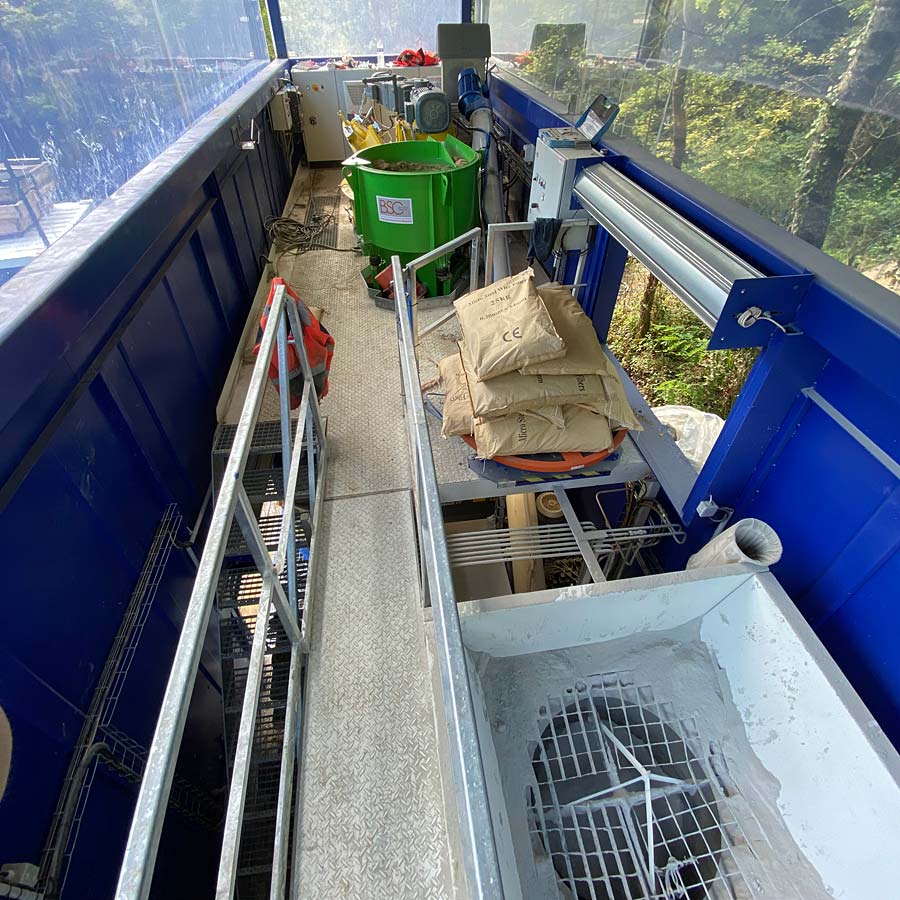
At the heart of the plant is the high-performance mixer, which is specially designed for materials subject to high stress. The ceramic lining ensures a particularly long service life and significantly reduces wear, even with abrasive aggregates and steel fibres.
Thanks to integrated frequency converters (FCs), the speeds of the mixing tools can be precisely controlled. This ensures
-
optimal mixing
-
uniform fibre distribution
-
consistently high concrete quality
Efficient cleaning and maximum flexibility
Another highlight is the high-pressure cleaning system, which enables quick and thorough cleaning of the mixer – a key advantage in day-to-day operation.
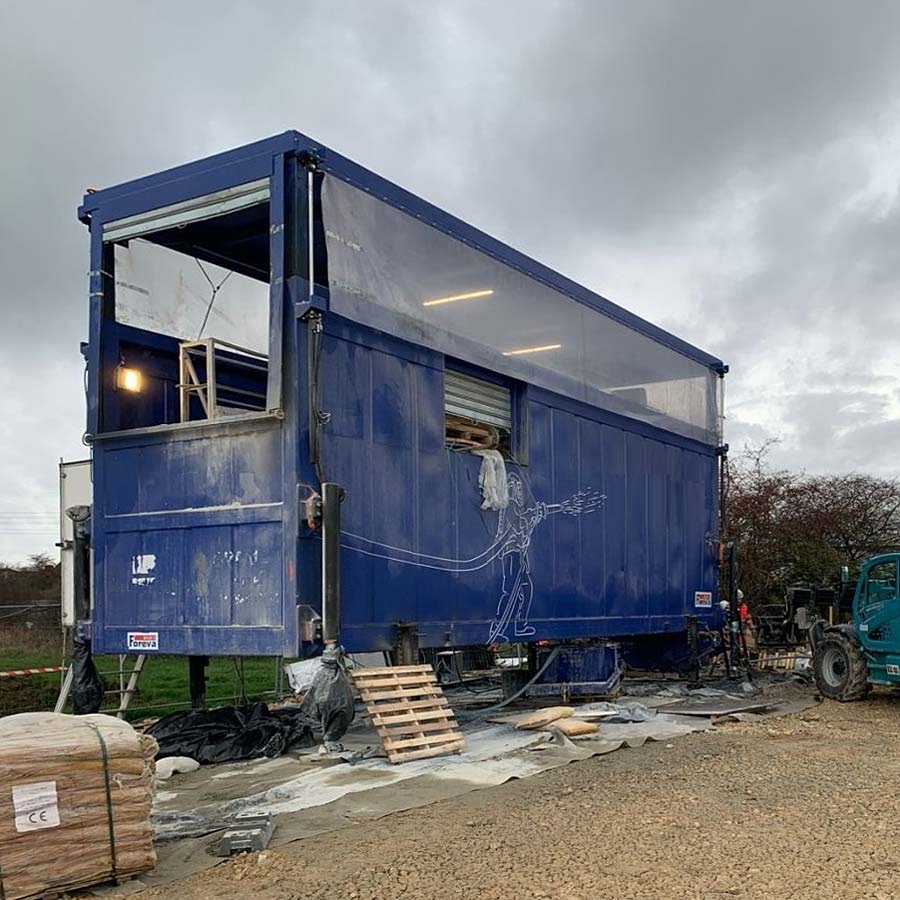
The plant is designed as a containerised solution and offers impressive mobility:
-
Retractable roof for easy maintenance and feeding
-
Hydraulically extendable legs for quick assembly and dismantling
-
Compact design for flexible deployment locations
Integrated fibre dosing and automated processes
An essential component of the plant is the integrated fibre dosing system. The steel fibres are fed directly and precisely into the mixer via a big-bag unloading station with screw dosing.
Advantages of this solution:
-
Precise dosing even with high fibre content
-
Prevention of clumping
-
Automated feeding without manual intervention
Continuous material flow with integrated concrete pump
A concrete pump is installed beneath the mixer to ensure the finished concrete is transported smoothly. This creates a continuous process:
-
Mixing
-
Discharge
-
Direct pumping to the placement point
This design reduces transport losses and saves valuable time on site.
Complete control – everything from a single source
The entire system is operated via an integrated control unit. All processes – from dosing to mixing time – can be controlled centrally and tailored precisely to the specific project requirements.
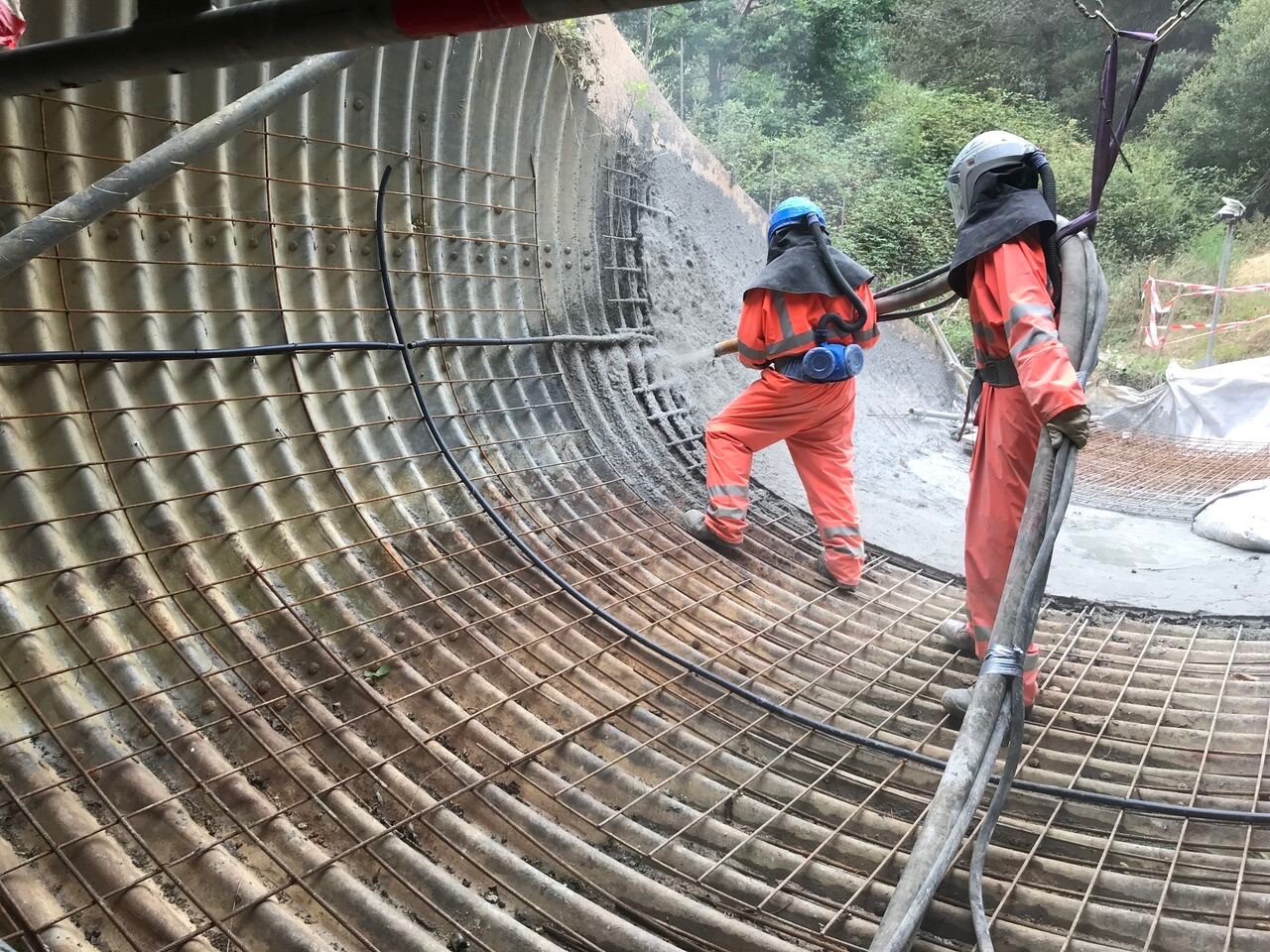
Case study: UHPC for tunnel refurbishment
A particularly typical area of application is the refurbishment of dilapidated tunnel underpasses. This is where mobile mixing plants for shotcrete applications come into play.
The advantages:
-
On-site production
-
Consistently high quality under difficult conditions
-
Rapid adaptation to changing site requirements
The flexibility of this technology is also evident in many other areas, such as infrastructure projects, industrial plants or special structures.
Conclusion: Maximum efficiency and quality in fibre-reinforced concrete production
Mobile fibre-reinforced concrete mixing plants such as the KKM750/1125 offer a powerful, flexible and cost-effective solution for the production of high-performance concrete with a high steel fibre content.
With innovative features such as:
-
precise fibre dosing
-
wear-resistant ceramic lining
-
integrated concrete pump
-
mobile container design
they set new standards in construction site logistics and concrete technology.
👉 Result: Higher productivity, consistent quality and maximum flexibility – exactly what modern construction projects require today.